Category Archive: fusionSpan

2024 Rewind: The Greatest Hits of Innovation and Impact

Jessica Richardson January 8th, 2025 by

As 2024 wraps up, let’s hit rewind and celebrate the year that was—Spotify-style! This year wasn’t just about work; it was a greatest-hits compilation of innovation, collaboration, and transformation. So, grab your metaphorical headphones, and let’s dive into our top tracks of 2024!

2024 Rewind: The Greatest Hits of Innovation and Impact

Track 1: Data Hits the High Notes

Laptop displaying a dashboard with data visualizations and charts, representing advanced data management and visualization tools.

Leading the charts this year was the star of the show—data! We cleaned, curated, and celebrated it. From helping nonprofits master database management to perfecting Salesforce data cleansing, we kept the data fresh and ready to rock. The Salesforce Spring ’24 update brought new features like enhanced Reports & Dashboards, making data visualization smoother than your favorite ballad. And let’s not forget our Tableau jam sessions, where we helped create marketing dashboards that were total showstoppers.

Track 2: The Digital Transformation Remix

2024 was the year nonprofits dropped their digital transformation mixtape. We teamed up with organizations to remix their strategies, featuring hits like Salesforce Nonprofit Cloud and the debut of our Emerging Technology Strategic Readiness Framework. Bonus tracks included actionable insights on data governance and how to unlock the true power of their data—it’s like giving your old playlist a brand-new beat.

Woman working on a laptop displaying futuristic data visualizations and analytics, representing digital transformation strategies.

Track 3: Innovation’s Greatest Hits

Illustration of a collaborative workspace with sketches of a lightbulb, gears, and a book, representing innovation and creative teamwork.

Innovation? It was on repeat all year. Whether syncing to the rhythm of AI, data, and audience alignment or helping associations boost revenue with personalized marketing campaigns, we kept the creativity flowing. Plus, our guide to blending functionality and aesthetics in web UX design was like the perfect mashup—equal parts practical and beautiful.

Track 4: Resilience—The Deep Cuts

Sometimes, the deep cuts are the most meaningful. We helped organizations craft effective policies for operating reserves and guided leaders through the ultimate playlist on winning executive buy-in for technological change. With the ever-evolving AMS model, we kept associations ready for whatever’s next—because staying ahead never goes out of style.

Illustration of a ladder leading to a red circle with clouds, symbolizing resilience and reaching for new heights.

Track 5: The Future’s Fresh Tracks

Person in a futuristic tunnel illuminated with neon blue lights, symbolizing innovation and the journey into the future.

The future called, and we answered with some bangers. From exploring Agentforce and its implications for associations to cranking up engagement through automation, we showed our clients how to harmonize CRM, data, AI, and trust. Together, we painted a picture of a future filled with possibilities—and it’s a total vibe.

Encore: Thank You for the Music

As the final notes of 2024 fade, we’re left with a playlist of unforgettable moments. This year wasn’t just about talking strategy; it was about hitting the road, collaborating with clients, and creating real impact together. You were the fans who made it all possible.

Here’s to an even bigger and bolder 2025—let’s keep making magic together. Cheers to a bright future, and thank you for being part of the band!

Group of people standing with a music equalizer overlay, symbolizing collaboration and memorable moments.

Nonprofit Operating Reserves: 4 Tips for an Effective Policy

Jackie McLaughlin. September 23rd, 2024 by

Nonprofits inherently work to make a significant impact with limited resources. Consequently, financial stability is a top priority for these organizations, as it enables them to continue their operations even amid economic uncertainties.

Your organization’s approach to achieving stability might include diversifying your fundraising tactics and leveraging donor software like Salesforce. However, these strategies will be ineffective unless you establish internal policies that guide your organization’s financial management.

One such guideline is your operating reserves policy, which outlines how your organization will establish and utilize its savings. This guide will discuss four considerations to help your nonprofit formulate an effective policy.

The hands of nonprofit professionals over financial documents and reports.

1. Determine an appropriate reserves target

Nonprofits commonly set fundraising goals, since establishing a specific target enables nonprofits to track their fundraising progress, whether the primary objective is to solicit major gifts or collect in-kind contributions.

Determining a target for your operating reserves is similarly necessary, but the process can be more complex. The appropriate amount for your nonprofit can be influenced by your organization’s size, funding model, and cash flow needs. Additionally, you must choose a balanced amount to avoid reserving too little for the fund to provide an effective safety net or too much so that you struggle to cover your usual expenses.

Set an amount that is large enough to cover payroll and other recurring expenses, plus some extra funding in case you incur any unanticipated costs. Avoid an excessive target to ensure you continue allocating the appropriate resources to other initiatives, such as member retention efforts or program activities and fundraising. No single standard applies to all organizations, but many nonprofits reserve three to six months’ worth of expenses.

2. Include all necessary provisions

According to Chazin & Company, operating reserves policies should “outline not only the high-level purpose and goals of the reserve but also the mechanics of its maintenance.” Once your target amount is set, draft a list of policy provisions needed to support this goal.

Your policy should include the following considerations regarding reserve funds:

  • The purpose: Transparently articulate the purpose of the funds, both to reassure stakeholders that you have a clear need for these reserves and to guide decision-making and ensure proper governance. By stating a clear purpose for your operating reserves, the policy will foster responsible use of the funds.
  • The source: Identify specific sources of funding in your policy to delineate how your nonprofit should allocate its resources to reach its reserves target. For example, will you add a new line item to your nonprofit’s budget? Or, will you designate a consistent percentage of unrestricted gifts to your operating reserves?
  • The limit: While it’s important to ensure your reserve fund is large enough to cover unexpected expenses, you must also be careful to avoid setting aside excessive funds that could otherwise be used for your operations. Provide a specific maximum at which your organization should stop reserving funds.

Leverage donation and financial data to inform your policy. You may glean insights from your nonprofit’s donor database to identify sources of income that could support your reserves target. Your financial data may also help you forecast expenses that your reserve fund should cover.

3. Review policy examples

Just as your reserves target will be unique to your organization, so will your policy. However, to develop an effective policy, it can be helpful to look at successful examples or templates.

Double the Donation provides the following general sections that should be included in an effective policy, which we’ll expand on:

Purpose

Start by defining the purpose of your operating reserves in one clear statement:

[Nonprofit Organization Name] will maintain an operating reserve to manage cash flow, cover unexpected expenses, and address financial emergencies. The reserve is intended to ensure the continuity of essential services and programs during periods of financial instability.

Definition and goals

Next, provide any necessary definitions to clarify the policy’s contents and clearly lay out your reserves target:

The target for the operating reserve will be set at six months of [Nonprofit Organization Name]’s average operating expenses. This target will be reviewed annually and adjusted as necessary based on changes in the organization’s financial situation and strategic goals.

Funding of the reserves

Briefly list the source (or sources) of the funding:

Operating reserves will be funded through annual budget allocations and surplus funds from year-end financials. 

Use of the reserves

Define any conditions for using the funds:

Use of reserves is restricted to situations where normal cash flow is insufficient to meet operational needs, or in the event of unforeseen financial emergencies.

Authority to use the reserves

Call out the specific individuals or committees with the authority to use or approve use of the funds:

Funds may only be used with the approval of the Board of Directors.

Reporting and monitoring use

Assign the responsibility of monitoring your operating reserves and the procedure that should be followed for reporting its usage:

The Finance Committee will monitor the reserve levels on a quarterly basis. The reserve policy will be reviewed annually by the Finance Committee and any recommended changes will be presented in a report to the Board of Directors for approval.

4. Consult a professional nonprofit accountant

Every aspect of your nonprofit’s operations—from investing in new technology to crafting donor communications to developing financial policies—can benefit from the expertise of a professional consultant. Such guidance can help your organization develop a plan of action that is uniquely tailored to your mission, operations, and resources.

Nonprofit accountants provide specialized knowledge in financial management to help your team navigate budgeting, compliance requirements, and other challenges. With this guidance, you’ll have the financial context you need to create a realistic and effective operating reserves policy.

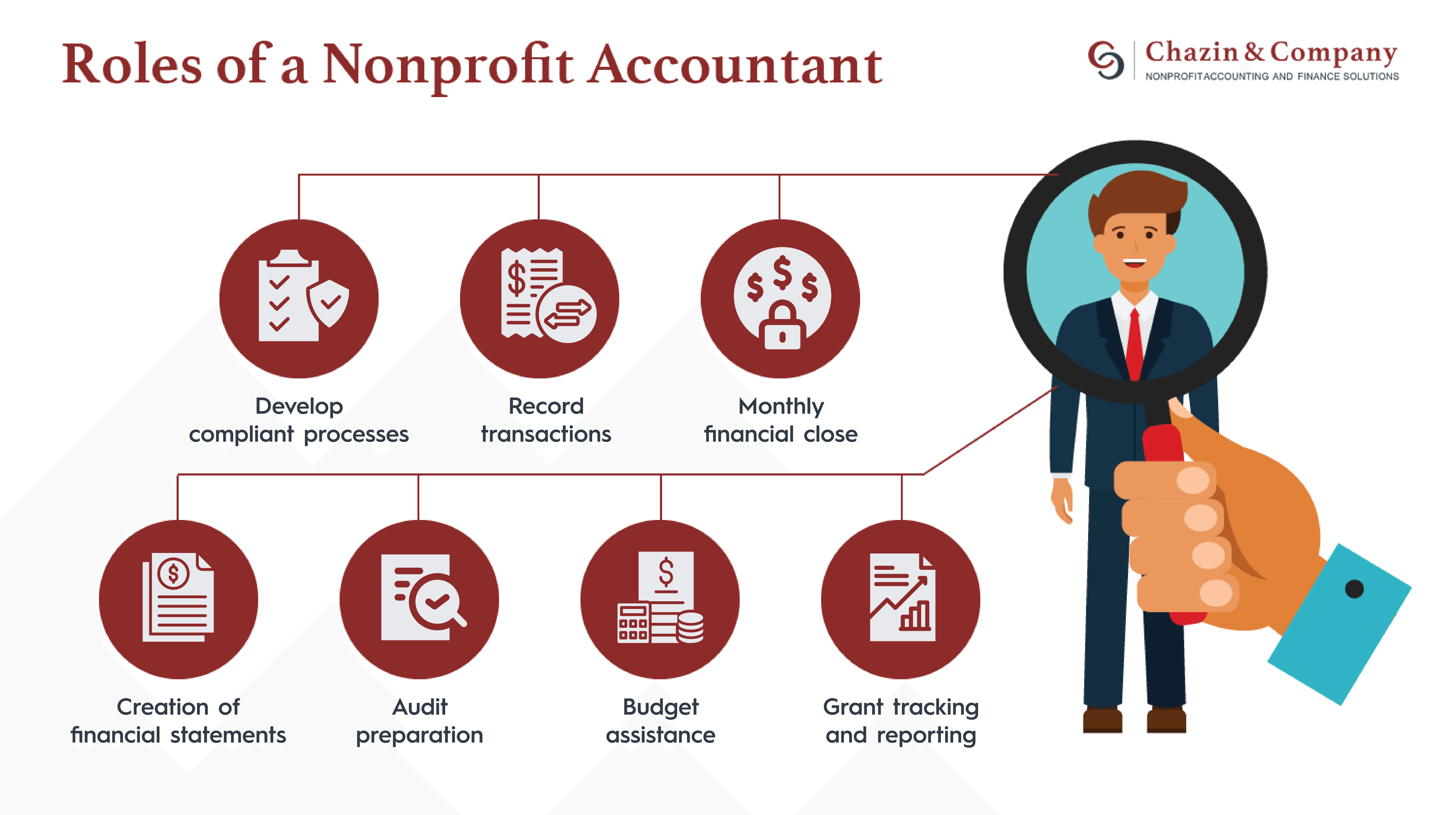
Additionally, nonprofit accountants can help your organization with the following activities:

The roles of a nonprofit accountant, who can help your nonprofit understand its finances to create an effective nonprofit operating reserves policy.

  • Developing compliant processes
  • Recording transactions
  • Monthly financial close
  • Creation of financial statements
  • Audit preparation
  • Budget assistance
  • Grant tracking and reporting

With expert financial guidance, your organization will be well equipped to set an accurate target and develop a policy that helps you achieve that goal. In the end, you’ll not only have an effective policy in place for your nonprofit’s reserve funds but also the expertise needed to enhance your long-term financial health.

A successful operating reserves policy is fundamental to your nonprofit’s financial sustainability, and longevity is the foundation of such a policy. Maintaining your operating reserves is an ongoing process that requires adaptation according to your nonprofit’s changing financial needs. By planning for potential challenges and remaining flexible, you’ll secure long-term financial viability for your organization.

5 Tips to Merge the Functional and Aesthetic in Your Web UX

Anne-Stefanyk. September 23rd, 2024 by

Every web-based designer knows the key to an effective user interface is striking the right balance between functionality and aesthetics. The data speaks for itself—on the functional side, 88% of website visitors are less likely to return to a site after having a poor user experience. As for aesthetics, 94% of first impressions are driven by a website’s design.

If you’re looking to transform your organization’s digital presence, merging the functional and aesthetic aspects of your website’s user experience (UX) is crucial to enhancing online audience engagement. The five tips below will help you develop a UX strategy that doesn’t sacrifice performance or visual appeal.

A web designer sketches a wireframe on a piece of paper.

1. Aim for a timeless and simple web design and UX.

84.6% of web designers believe that crowded web design is the most common mistake made by small businesses. Whether your organization is a small business, nonprofit, or association, the negative UX implications of cluttered page design can be serious.

That’s why your organization should take an uncluttered, evergreen web design and UX approach. Prioritize the following elements to build a timeless design and user experience:

  • Streamlined, clear navigation. Use a simple main menu with just a few items. Keep drop-downs to a minimum so your menu remains uncluttered and easy to navigate.
  • Uncluttered layout. Make the most of white or blank space to give your design elements breathing room on the page. Choose additional elements, like photos, videos, or graphics, intentionally. Every page element should play a unique, vital role in the design.
  • Consistent UX across pages. Incorporate the same brand elements, such as fonts, colors, and button styles, across all website pages. Also, ensure your navigation elements and menu remain consistent. This will give visitors a stress-free browsing experience while enhancing your brand recognition.

Using a timeless, uncomplicated design allows your organization to avoid costly, time-intensive redesign processes. By avoiding trend-chasing, you can create a perennially stylish website that maintains its visual appeal over the years. Plus, a simple navigation process reduces your website’s complexity, making it a more performant resource that loads quickly on all devices.

2. Incorporate interactive elements.

Interactive content lies at the intersection of visual intrigue and usability. It helps drive online engagement by empowering users to interface with your website’s content in a more hands-on way. Statistics show that interactive content drives online conversions and leads to 52.6% higher engagement than static content.

Here are a few ideas for engaging interactive content you can incorporate into your site:

  • Microinteractions. Kanopi’s higher ed web design guide defines microinteractions as “the small moments and design elements that users experience on your website that engage them more deeply.” Examples include buttons that animate when users hover over them or more complex interactive graphics that allow users to engage with different data points. These small website elements combine aesthetically engaging design with functional aspects such as buttons or links.
  • Scrolling animations. These include techniques such as parallax scrolling, fade-in and fade-out elements, sticky menus, and reveal animations. When used sparingly, these elements can provide greater visual intrigue when scrolling through a website without sacrificing usability.
  • Interactive timelines or maps. Timelines and maps provide engaging mechanisms for depicting your organization’s history or reach. With the help of a professional design firm or online design tools, these infographics are relatively easy to create. All you need to do is provide data and branding guidelines to build the element.

Enhance your website’s cohesiveness by ensuring all interactive elements incorporate your unique branding, including your color palette, typography, and image style. Carry the digital brand elements that are on your website over across your entire digital footprint – including social media and any digital signage or donor walls at your facility.

3. Prioritize mobile responsiveness.

Mobile responsiveness is a website must-have—it’s not only a crucial search engine ranking factor, but it can also make or break your website users’ opinions of your site. Plus, these days, most people will look at your website on their mobile devices—statistics show that over 90% of internet users access the web on their phones.

Align mobile usability with the visual look of your website by optimizing the following elements:

  • Design elements like your layout, colors, and fonts should automatically adapt to different screen sizes.
  • Functional elements like buttons, menus, and links should be easy to view and touch on a phone screen.

Test your website by viewing the layout in the mobile format when editing the site. You can also recruit real users to test your mobile website and provide recommendations (more on user testing a little later!).

4. Enhance accessibility.

Web accessibility is inherent to a positive user experience. Here’s how the Web Accessibility Initiative defines this term:

“Web accessibility means that websites, tools, and technologies are designed and developed so that people with disabilities can use them. More specifically, people can perceive, understand, navigate, interact with, and contribute to the Web.”

You shouldn’t sacrifice accessibility for the sake of aesthetics. Accessibility is a legal mandate for most types of websites. Plus, prioritizing accessibility helps create a user-friendly experience for all users.

Ensure your UX and brand elements, such as your logo, colors, and typography, adhere to the Web Content Accessibility Guidelines (WCAG). These guidelines act as a comprehensive blueprint to create a website that is perceivable, operable, understandable, and robust.

Also, continually test your website to identify accessibility concerns. Top content management systems like WordPress and Drupal offer automated accessibility plugins and tests, but they may not tell the full story. We recommend also conducting manual testing on your website to assess its accessibility and catch any issues that could have fallen through the cracks.

Manual testing involves testing keyboard navigation and working with real users with a variety of disabilities. You can also work with a professional web design firm with experience in accessible design to audit and update your website for better usability.

5. Gather ongoing user feedback.

While integrating your website’s functionality and visual look, gathering data will help determine the effectiveness of your efforts. Evaluating user feedback will help you not only make changes to improve your website but also enable you to predict the impact of future changes to determine the best course of action.

Use the following strategies and tools to collect and implement user feedback:

  • A/B testing. This involves creating two different versions of a web page or design element and assessing which version performs best for your audience. For example, you could create two different versions of your nonprofit’s online donation page—one with a call to action (CTA) that says “Give Now” and the other with a CTA that says “Donate Today”—and assess which version is more effective for driving conversions.
  • User surveys and polls. Create a survey or poll embedded into your website to ask simple questions about the user experience. You could also gather a focus group made of stakeholders, such as members, volunteers, donors, or customers, and ask targeted questions to understand their thoughts and feelings about your website. Be sure to inquire about your site’s accessibility to understand how effectively you’re meeting users’ unique needs.
  • Website analytics. Use tools like Google Analytics to track website metrics, such as bounce rate, time spent on each page, and conversion rate. Identify high and low-performing pages to determine which page elements could be improved to drive better engagement.

Merge user feedback incorporation with your regular website maintenance processes. Refresh your site’s technical elements, update your content, and perform other maintenance tasks with user feedback and analytics in mind. That way, you can show audience members that you’re dedicated to continually improving your site based on their preferences and needs.

Functionality and aesthetics are two sides of the same coin when it comes to building a high-value website. Prioritizing both elements equally will help you create the user-friendly, visually stunning website you need to stand out in today’s crowded digital world.

The Top 3 Concerns For Associations Include AI, Data, and Audience Alignment

Mark Knill July 15th, 2024 by

July is already well on its way, but we’re still very much thinking about the conversations at last month’s AMSFest Chicago and the key concerns that emerged through our follow-up conversations with decision makers in the association space.

To call these topics concerns may seem a touch dramatic, but it’s important to note that the underpinning theme behind these conversations is a recognition of the need for change. Specifically, how do associations adapt to meet changing member needs within a rapidly evolving landscape?

The Top 3 Concerns For Associations Include AI, Data, and Audience Alignment

Here are the pieces we identified as top priorities among thought leaders in the space and our take on how associations can make progress in these areas right now.

How Can Associations Better Prepare Data for AI?

How Can Associations Better Prepare Data for AIOur community is beyond curious about leveraging AI to ease staff workloads, engage members, and better inform decision-making processes. And so it’s no surprise that data quality, specifically how to condition data to enable AI, emerged as a recurring topic of conversation. This was so top-of-mind for the group that it was not only present in every AI session we attended but also a major topic in almost every break-time or lunch conversation we joined.

Why is this? Because two facts are increasingly clear.

  1. Associations must leverage AI to keep up with changing member needs.
  2. AI is most effective when fueled by accurate, complete data.

For associations who have long been the keepers of massive amounts of member data, the struggle to turn these mountains of information into a usable resource for staff, let alone AI enablement, is a chore. Common obstacles to this process include integrations, legacy systems, and incomplete data.

Data Maturity Assessments Emerge as Clear Next Step

How do associations begin to tackle this process? There’s consensus that organizations need a comprehensive data plan. That plan should, at the very minimum, stop the creation of dirty or incomplete data in the short term while moving toward integrated, accurate data sets that support AI and data-first initiatives.

A data maturity assessment is a great place to start and will help define the current state, challenges, and opportunities in front of an organization. This weaves together data quality, integration strategy, data governance, and security into a comprehensive view of how data is used in the business. This becomes the departure point for data strategy.

Contact us

How Can Associations Find Better Alignment With Their Audiences?

How Can Associations Find Better Alignment With Their AudiencesMany of these data-specific concerns were mentioned in larger discussions surrounding the need for stronger audience engagement.

Here are some of the common questions we heard:

  • Do our digital experiences meet our constituents where they are?
  • Do we understand our members’ wants and needs? Are those wants and needs informing our decisions?
  • Are our offerings – certifications, classes, accreditations, etc.- still relevant to our members?

These questions all speak to a consistent undercurrent – member expectations have changed so significantly that we are no longer sure we are delivering enough value to stay relevant. We are all so busy trying to support the current state that we might miss the opportunity to think holistically about our organizations.

Changes to Audience-Facing Strategies Should Start with an Audit

One of fusionSpan’s clients, a global association, recently found themselves asking many of these same questions. They recognized a need to improve their relevancy to their members and embarked on a digital strategy audit to help identify areas of improvement and opportunities for modernization.

fusionSpan’s Digital Strategy Team worked with them to build member personas and conduct audience interviews that provided a more complete understanding of the most prominent issues facing their members and how they are perceived in their constituent groups. This led to the discovery of both immediate changes and longer-term strategic initiatives to build engagement over time.

Find Out More

How Can Associations Be More Efficient?

Doing more with less is a constant, especially in the world of associations where lean teams are a norm. This conversation is not new, but we noticed a change in the scope of the discussion as association leaders focus more on staying ahead of trends, leveraging growth opportunities within the status quo, and identifying opportunities to automate and rationalize processes.

We saw a compelling demo from Salesforce of how AI can help reduce membership churn.  When a set of pre-defined behaviors are observed, alerts and notifications help staff focus proactively on the most at-risk members first. The vision was clear: organizations that leverage data effectively will deploy their resources most efficiently.

Associations are Committed to Making the Jump

Over the past few weeks, the fusionSpan team has spent a lot of time listening to and learning from the people leading these initiatives from the ground. While at times, there is a faint sense of overwhelm, the more prominent theme has been a dedication to action in the face of change.  If we can help you engage, empower, and grow your organization reach out – we’d love to share what we know and do.

Contact Us

Retention and engagement: the importance of investing in content personalization

Avatar photo August 30th, 2023 by

Retention and engagement: the importance of investing in content personalization

Membership associations thrive on being a place their members can go for specific content, training and events for their area of expertise. But while an org’s content will already be focused on a particular domain, their audience of members will break down into multiple niches all with their own unique combination of interests.

When that’s the case, content personalization becomes a crucial part of your membership experience. When your members open up an email or log into your portal, you want them to feel that the content they see has been designed and served with them in mind. The more you can cultivate that feeling, the more you can use it to drive sales and signups for events, courses and opportunities.

More importantly, it makes it easier for members to see the value you have on offer. If they aren’t aware of the content you have or where to look for it, this can lead to frustration and later attrition. Content personalization makes that content hard for them to miss, whether by spotlighting it when a member logs into the system or by pushing it out to draw disengaged members in.

Learn what moves your members to click

When members come to an association for professional development, they’re usually looking for content on specific topics. They’ve established a niche in their career and they want to dig deeper into that. The problem is that if they aren’t being served personalized content, they might not know what you have to offer in their area of interest or where to find it.

If you have data on which topics a member cares about and their area of focus, you can understand what they’re more likely to engage with in the future. You can then recommend webinars, courses and journals that are specific to their interests.

There are two kinds of data you can collect about your members. One is using declarative information, for example the details that they list on their profile. The other is deducing what you can from the content they access, and building up a persona based on what people with similar interests engage with.

The more focused you can be in your targeting, the better

The more focused you can be in your targeting, the better

For example, imagine you’re an association for veterinarians. While your membership base professional interest in animal healthcare, you’ll have numerous breakdowns into specific niches within that – such as primary care or specialist, or small or large animal practitioners.

If you’re pushing the same content about breathing disorders in dogs to all of your members, the vast majority of them won’t be interested because it’s not in their field. And this is a direct hit to the membership experience. The more they see content that isn’t for them, the more those members will start to question the value of being part of the association.

But if you can access accurate data on your membership base’s interests and engagement, you can know which members are small animal practitioners with a particular focus on treating canine breathing issues and suggest that content only to them– and not to members who won’t be interested. You can go further than pushing content too – for instance, when they’re on your careers page, your association can recommend personalized opportunities that fit their experience, specialism and geographical location.

You don’t have to do everything at once

Associations can often make the mistake of thinking that their options are going all in with a cutting-edge recommendation engine or doing no personalization at all. Faced with that choice, it’s easy to assume that content personalization is too overwhelming and expensive to try out.

It’s true that there are powerful, complex and expensive personalization tools out there, like Optimizely and Google Optimize. But diving in at the deep end isn’t the only way to get involved. There are cheaper and less complex tools available, such as WordPress plugins, and these give you an easy way to set up some success metrics and see how it goes.

Content personalization might involve a technical solution, but associations don’t need to be running at the tech frontier for this. What’s more important is to figure out what your organizational goals are, define your strategy and make sure the tools you use are supporting those.

Start by addressing the goal that’s most important to your association

Start by addressing the goal that’s most important to your association

While on the surface content personalization is a way to get more eyes onto your resources, it can be far more than this. Ultimately, it can provide a tactical way of supporting your association’s wider strategic goals – and this is where we’d recommend you begin.

Consider membership renewals, for example. Associations are always looking for ways to boost retention and membership engagement, and content personalization can be critical to that.

Start by focusing on your members most at risk of dropping away and use your data to figure out their personas. Once you have a picture of who they are and why they may leave, you can launch a campaign to mitigate this risk by delivering content you believe they want to engage with. The more they engage with your content – even if it’s only emails or social content to begin with – the more likely they’ll be to step up their involvement over time and see the value of renewing.

Alternatively, you could use content personalization to better support your events and education services. For example, if a member is engaging with content as part of their continued education goal, your content personalization could point out an upcoming conference that will get them the final 10 CE credits they need. As well as boosting engagement with education and events, this helps that member to see even more of the value that your org has to offer.

In order to support your association’s goals through content personalization, it’s critical to be proactive. If you only personalize what users see when they log into your system, the only people who see that value will be regularly returning members. The members at risk of not renewing won’t be coming into the system normally, so you need to push personalized content to them and start pulling them back in.

To learn more, see what associations need to know about the membership experience. Or to find out more about digital strategy can help enhance your membership engagement, take a look at our case studies or get in touch.

What associations need to know about membership experience

Avatar photo August 17th, 2023 by

Associations depend on their members. And while new members might be attracted by an association’s services, the experience members have when accessing those services is what keeps them coming back – or what causes them to leave.

Because of this, the membership experience (MX) should be your association’s strongest guiding principle. Whether it’s addressing a digital experience or a non-digital touchpoint, MX is a responsibility that needs to be thought of right across the organization, and owned by every team as a shared goal.

What associations need to know about membership experience

Associations need to go above and beyond to prove their value to members

Associations need to go above and beyond to prove their value to members One of the biggest problems facing associations today is how to prove their value. In the past that value was easy to demonstrate. Membership provided access to exclusive resources that couldn’t be found anywhere else – resources like training courses, seminars, job opportunities and communities for networking.

Today, however, so much of that is freely available online. People can build their own networks and find opportunities on platforms like LinkedIn. They can access content, webinars and training specific to their interests from a wide variety of sources. Even when content is locked behind a subscription, generative AI tools like ChatGPT have proven able to scrape websites and help users bypass paywalls.

When membership organizations try to compete on the same terms as freely available content, it puts them in a difficult position. If prospective members are asked to choose between paying $100 for an association’s services or paying nothing for something similar online, it’s tough for them to see the value of membership.

But membership associations are more than a collection of resources and services. The experience that comes with an association is the peace of mind that what’s on offer is credible, high value, and managed by a community who knows your professional practice inside and out. This is the primary way in which your membership experience can “delight” members – an outcome that many associations are chasing after.

Digital hygiene factors are a must for members

Improving membership experience isn’t only about creating delight however. The digital experience that comes from moving through your org’s ecosystem is too often overlooked. On a more everyday level, it’s simply about shaving off areas of friction online so that member delight becomes a possibility.

It’s worth noting that the digital expectations of members are rising, in part due to the seamless customer experience they get when using digital ecosystems such as Google and iOS. When an association’s technology is less intuitive than for-profit sectors of the internet, it becomes a potential point of frustration – a hygiene factor.

Hygiene factors affect the membership experience before someone even joins as a member. At a base level, you need to make sure people aren’t dropping out at the first hurdle because your sign-up process is confusing or slow.

Once they have become a member, it becomes a question of making your ecosystem as intuitive to navigate as possible. Even if you have a platform like Salesforce linking it all together behind the scenes, your ecosystem is going to be a complex combination of tech – from your website and member portal to systems for event management, continued learning and volunteer management.

What do your members experience when they move between those systems? If they’re in a webinar and want to check on the CE credits they’re earning, is it clear how they can do that or are the links between systems disjointed? If they’re only interested in a specific topic, can they easily find where your information on that topic is – or can you deliver more individualized value by proactively putting it in front of them?

Membership experience should be a cross-silo goal

Membership experience should be a cross-silo goalThe pitfall many organizations fall into is that they prioritize membership experience but approach it too narrowly. Usually such a membership team doesn’t have the power to make sure that IT thinks about MX when integrating new pieces of tech infrastructure, or that marketing is making it a central pillar of how they promote the association.

For example, the platform that your event team chooses to use might be perfect for them in their silo. But without a wider consideration of membership experience, they probably won’t think about how well that platform integrates with the rest of the tech stack. It might work perfectly well in isolation, but becomes a major sticking point for members moving across different systems.

Membership experience is far bigger than the work of one dedicated team. It needs to be seen as a responsibility that spans across each different platform and department, and everyone needs to be pulling together in the same direction.

IT friction is an MX issue

When you start thinking about membership experience as a cross-silo duty, it doesn’t just improve matters for members. It can also make life easier for your overstretched IT teams.

Friction between the IT department and the rest of the organization is a common problem for associations. IT is the glue that holds your tech ecosystem together, but they get pulled in all directions at once as each unit wants to choose and implement different tools for their needs.

Often IT doesn’t have the staff or resources to fully support each department’s individual focus. If that’s the case, the experience for members suffers as the tools, branding and UX become compartmentalized and fractioned.

The result is that each department feels like IT is pushing back on what they want. That’s especially a problem if the organization decides they want everyone to use a tool like Salesforce because it will help drive membership experience, but individual teams are only thinking of what tool they prefer to use.

Those conflicts become easier to resolve when membership experience is embodied across the entire organization. If the call is made to implement a single platform, it’s not the IT department enforcing change onto everyone else – it’s part of a wider strategy to drive membership experience and engagement, and support the organization as a whole.

To find out more about how we can help your association drive membership experience and engagement, take a look at our case studies or get in touch.

Step 2 of Your AMS Journey: Aways Have a RFP

Noel-Shatananda October 16th, 2020 by

As an organization that specializes in AMS support and implementation, we typically step in after the selection of an Association Management System has already been made by your organization. Our first step is to ask the AMS partner or association for their Request For Proposal, but a surprising number of clients never issue one.

What is a Request For Proposal?

A Request For Proposal (RFP) is a document used when an association is seeking support or consultation on a tool, product, or service for their organization to leverage. The RFP is designed to outline the requirements for a specific project, and is used to solicit bids from vendors for the association to consider during the process.

While there are a variety of ways to format the proposal, they typically take time and resources to create. Make sure this is a project your association is fully committed to doing before beginning the RFP process.

Here are some things to consider as you create an Request For Proposal for your AMS Journey:

What is a Request For Proposal?

Clearly Defined Needs: This builds directly off Step 1 in Your AMS Journey, “Ask Why.” Be sure to have a high level set of needs with a strategic vision as you begin outlining this document.

The More Detail, The Better: Now, take that strategic vision the organization has and break it down into detail level requirements. Do not go into the tactics (the how) but clearly state the requirement (the what) in an AMS agnostic way. A typical example could be, “the new AMS supports memberships that can be anniversary (day of purchase) or calendar (yearly) based.”

Hire a Vendor Selection Consultant (VSC): Contemplate hiring a vendor selection consultant who can help you get the details finalized. They usually come with deep knowledge on what an association your size should typically look for. Larger organizations with a bigger staff need to consider this more, since the complexity of their processes are usually higher.

Caveat: Some VSCs may come in with a lengthy list of potential requirements that an organization your size may typically need. Ensure you choose the ones that are most relevant to your organization for the present and the near future. However, beware of adding bells and whistles that you do not need into the basket.

Reduce Complexity: Work with the consultant who would be an unbiased third party to evaluate your existing processes and make the hard decisions on which processes stay, and which ones need to be eliminated. Beware of legacy workarounds: we tend to see a lot of processes that organizations want us to implement that were actually workarounds put in place to overcome a deficiency of the legacy AMS.

Evaluate Bylaws: Oftentimes fusionSPAN has been asked to implement a piece of functionality because the bylaws mandated it, when in reality it made very little sense. We recommend that the association take this opportunity to look at its bylaws carefully to evaluate its relevance during the request process.

It’s your blueprint: The RFP will be the blueprint of the tool that will take you into the future you aspire to march towards. At the end of the day, ensure you are confident and happy with your blueprint.

AMS-Journey-img-02

There are a variety of resources and templates online for your association to use when creating a RFP. Make sure to highlight your organization information and required details for this implementation, as well as budget info, deadlines, and any questions you will have for potential vendors. Remember, the idea of this proposal is to specify your needs to help find the best fit for your association.

Stay tuned for Step 3 of Your AMS Journey: Selection to Adoption, where we discuss choosing the right Product Partner for your association. In the meantime, don’t hesitate to reach out to fusionSPAN with any of your AMS implementation needs!