AI readiness and governance: where to start
Most mission-driven organizations know AI matters. Fewer know where it fits or how to start safely. This guide covers the four things to get right first: data, use cases, governance, and human oversight.
 Ask Ollie
Start with readiness, not tools
AI is moving quickly, and the pressure to do something is real. Members expect faster, more personal service. Staff are stretched. Boards are asking what the plan is. It is tempting to pick a tool and start experimenting.
Experimenting is healthy, but organizations that get lasting value from AI usually start with a different question: what are we ready for? Readiness covers your data, your processes, your people, and your policies. A clear view of all four helps you avoid investing in the wrong initiatives, and it helps leadership and staff agree on priorities before money is committed.
AI also looks different for every organization. Internal uses reduce manual work: automating workflows, surfacing member insights, supporting standard operating procedures, and streamlining reporting. External uses face your members and donors: agents that answer questions, guide renewals, and personalize experiences. Most organizations should start inside, where the stakes are lower and the lessons come faster.
Data readiness: the foundation
AI tools can only work with the data they can reach and trust. If member records are duplicated, if key fields mean different things to different teams, or if important information lives in spreadsheets and disconnected systems, AI will reflect those problems back to you, often with confidence.
The good news: AI is also one of the fastest ways to clean up your data. Models like Claude, alongside Salesforce’s own duplicate and data quality tools, can scan thousands of records to flag likely duplicates, inconsistent values, and stale information, then propose fixes. Your team reviews and approves each change, so cleanup moves faster without giving up control.
You do not need perfect data to begin, but you need to know where you stand. Focus on the data that your first use cases will depend on. Ask whether it is complete, current, consistent, and accessible. Ask who owns it and how it is maintained. Then fix the gaps that matter most for those use cases rather than trying to clean everything at once.
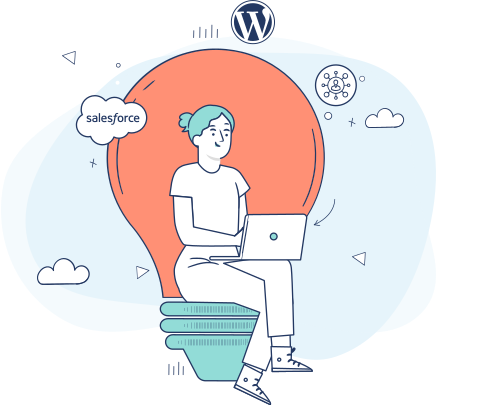
Integration matters too. An AI assistant that can see membership data but not event history or support cases will give partial answers. A unified view of each member or donor, whether in Salesforce, through Data 360, or through an integration platform, makes AI far more useful.
Quick data readiness checklist
- We know which systems hold our member, donor, and constituent data.
- Our most important records are deduplicated and reasonably current.
- Key fields have agreed definitions and owners.
- Our core systems are connected, or we have a plan to connect them.
- We know which data is sensitive and who is allowed to access it.
- We have a process for keeping data clean after cleanup projects end.
Choose your first use cases carefully
The best first AI projects share a few traits. They solve a real, recurring pain point. They rely on data you already have in reasonable shape. They have a clear owner on staff. And the results are easy to check, so people can see whether the tool is helping.
Gather ideas widely, from membership, events, finance, programs, and member services. Then score each idea on two simple dimensions: impact and feasibility. High-impact, high-feasibility ideas are your first projects. High-impact, low-feasibility ideas belong on the roadmap, often after data or integration work. Low-impact ideas can wait, however interesting they are.
Good starting points often include drafting routine responses for staff to review, summarizing case histories or member activity, answering common questions from internal knowledge, and preparing reports. These build skills and confidence before you put AI in front of members.
Governance that fits a mission-driven organization
AI governance does not need to be a long policy document that nobody reads. It needs to answer a few practical questions clearly. Which tools are approved, and for what? What data can and cannot be shared with them? Who approves new use cases? How do we check quality, and what happens when something goes wrong?
Make sure governance covers both the platform and the people. On the platform side, review data access, security, and how vendors handle your information. On the people side, set clear expectations about disclosure, review, and when to escalate. Revisit your policies regularly, since both the tools and your use of them will change.
Trust is central to member and donor relationships. Governance is how you protect it while still moving forward.
Keep humans in the loop
Human oversight is the most important safeguard in early AI work. Design each use case so that a person reviews outputs before they affect a member, a donor, a payment, or a decision. As confidence grows and results are proven, you can thoughtfully expand what runs automatically, but that should be a deliberate choice, not a default.
Define handoffs clearly. When should an agent pass a conversation to a staff member? What should it never attempt? Who monitors results week to week? Clear handoff rules make AI more useful and reduce risk at the same time.

Agentforce and Claude: choosing the right approach
For organizations on Salesforce, Agentforce brings AI agents directly into the CRM, working with your existing records, permissions, and workflows. It is a natural fit for member service, renewals, and staff assistants that act on Salesforce data.
Claude is an enterprise AI platform in its own right. Salesforce and Anthropic are strategic partners, and Claude is one of the models that can power Agentforce inside Salesforce’s trust boundary. Claude also connects securely to Salesforce, Slack, documents, and your other systems, so its agents can reason, take action, and automate multi-step work across your whole stack. The question is not which tool, but where each agent should live, and the answer depends on your data, your use case, and your governance needs.
A practical starting sequence
Align leadership and staff
Agree on goals, concerns, and how success will be measured before committing budget.
Assess readiness
Review data quality, integrations, skills, and policies against the use cases you are considering.
Prioritize use cases
Score ideas on impact and feasibility, and pick one or two internal projects to start.
Set governance basics
Approve tools, define data rules, and assign owners for each use case.
Pilot with human review
Launch small, keep people in the loop, and measure results against your goals.
Learn and expand
Use what you learn to refine governance, fix data gaps, and move to the next use case.
Questions we hear
Do we need perfect data before we start with AI?
No. You need to understand the data your first use cases depend on and fix the gaps that matter most for them. Readiness is about knowing where you stand, not perfection.
Should our first AI project be member-facing?
Usually not. Internal use cases carry lower risk, teach your team faster, and build the confidence and governance you need before putting AI in front of members.
Do we need an AI policy before we begin?
You need the basics: approved tools, data rules, and clear owners. A short, practical policy that you update regularly works better than a long one written in advance.
Agentforce or Claude?
Usually both, working together. Claude can power Agentforce agents inside Salesforce, and Claude-based agents can also work across Salesforce and the rest of your stack. The use case, your data, and your governance needs decide where each agent runs.
How fusionSpan helps
We help nonprofits and associations build practical AI strategies grounded in their data, workflows, and needs. Our services include AI readiness assessments, use case identification and prioritization, Agentforce implementation, workflow automation for Fonteva and Nimble AMS, and custom AI solutions built with Claude. Our Volunteer Coordinator Super Agent won the Dreamforce Agents for Good Hackathon in 2025, and we apply the same approach with clients: start with a real problem, keep people in the loop, and build from there.
Not sure where you stand? Take our free 6-minute AI readiness assessment. Everything in this guide applies whichever AI tools you use, from Claude and Agentforce to Microsoft Copilot, Google Gemini, or ChatGPT.
Your next step
Each step builds on the one before. Start wherever you are; most organizations begin with the free assessment.
- 1Free
AI readiness assessment
Eighteen questions across data, systems, use cases, people, governance, and investment. See your readiness level instantly, and get a copy by email if you like.
Take the assessment - 2Free
AI Strategy Workshop
A working session on your goals and pain points. We map the most promising use cases and you leave with an action plan for your first AI project.
Book the free workshop - 3$3,000
AI & Data Readiness Workshop
A deep review of your data and systems with key stakeholders, an honest assessment, and a written roadmap with steps, milestones, and resources.
See what is included
Using Copilot, Gemini, or ChatGPT? All three steps are tool-neutral. Clean data, clear governance, and well-chosen use cases pay off whichever AI your team uses. When we build agents, we build on Claude and Agentforce.
Planning a modernization or AI project?
Talk with a consultant who knows your industry.